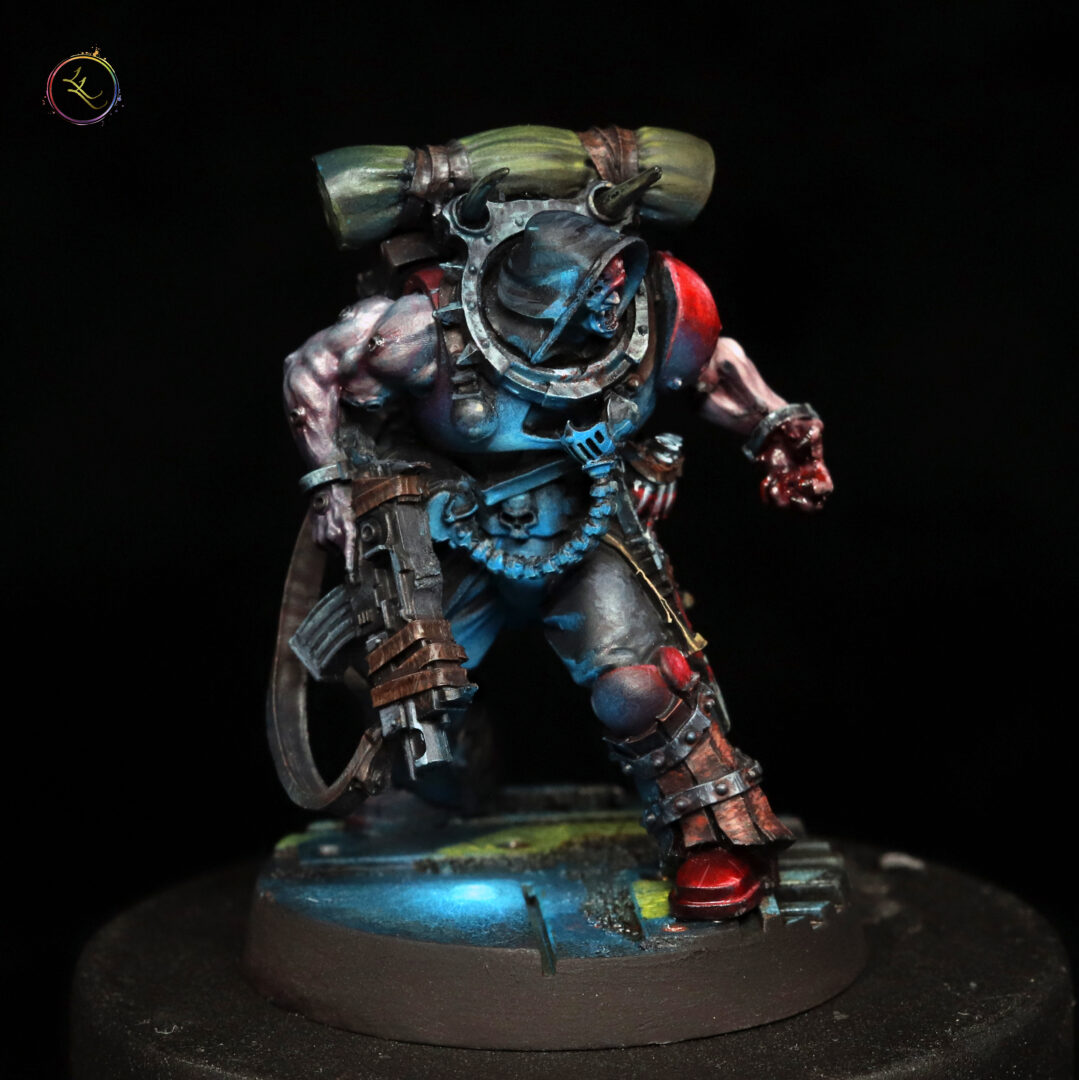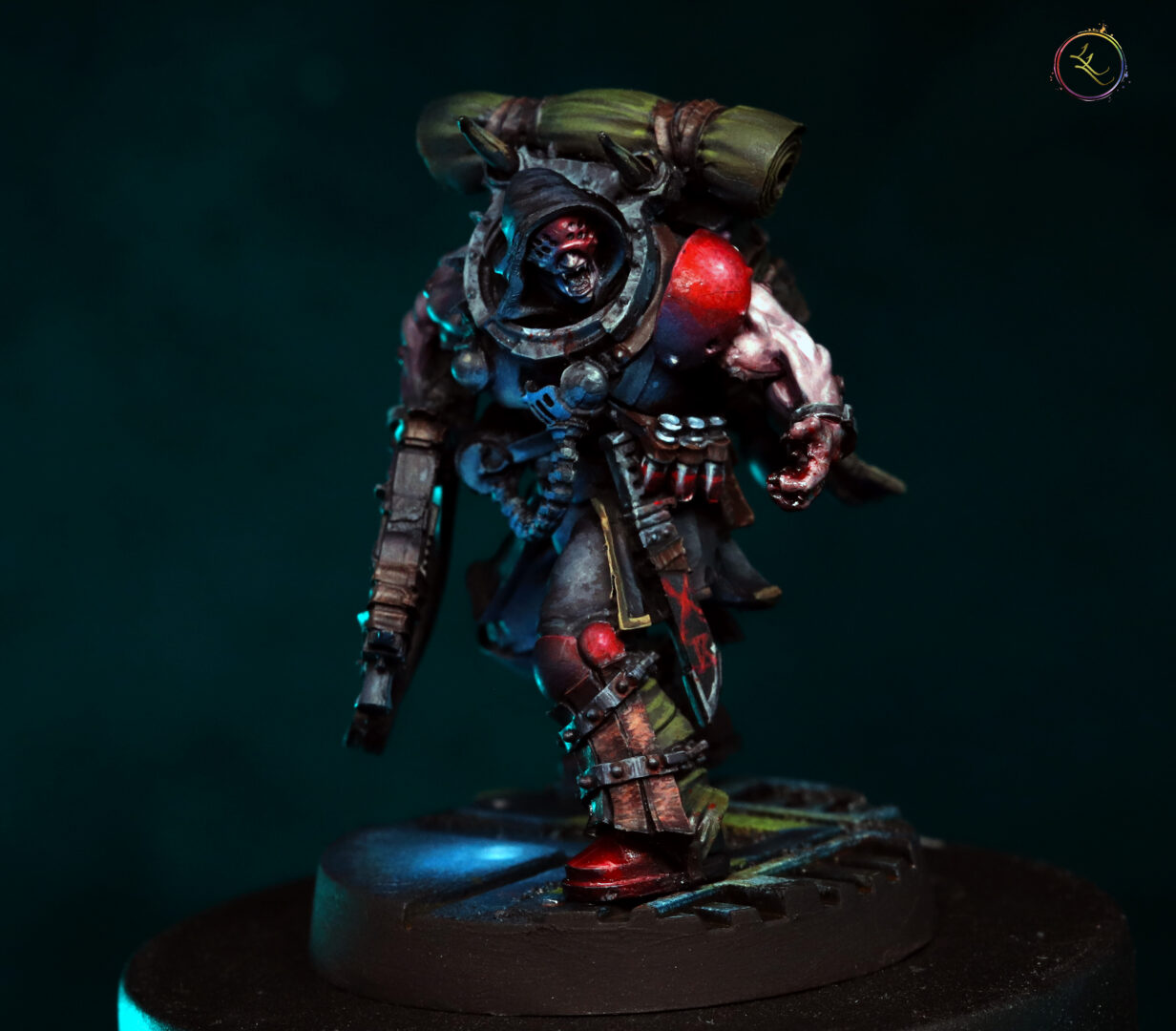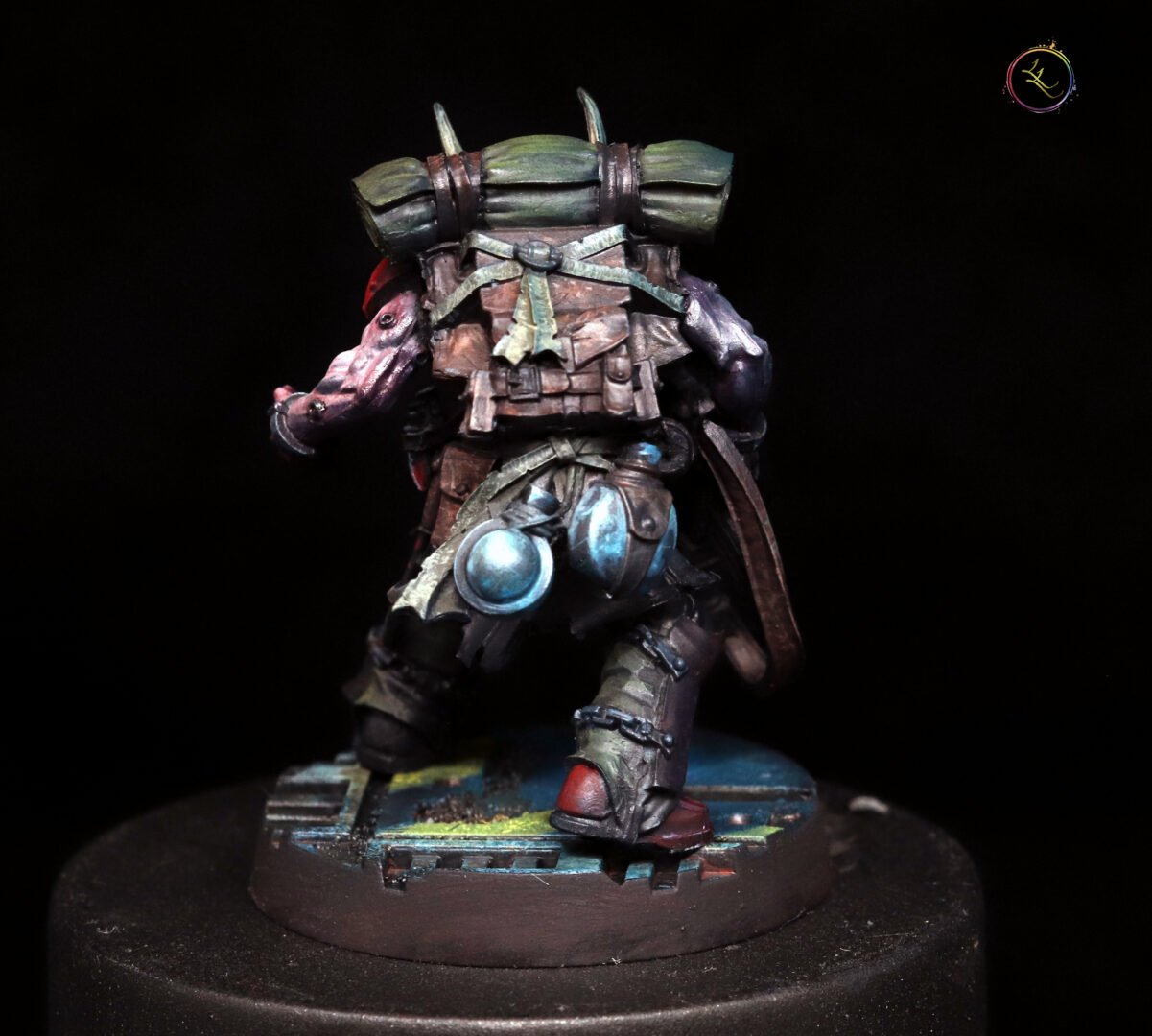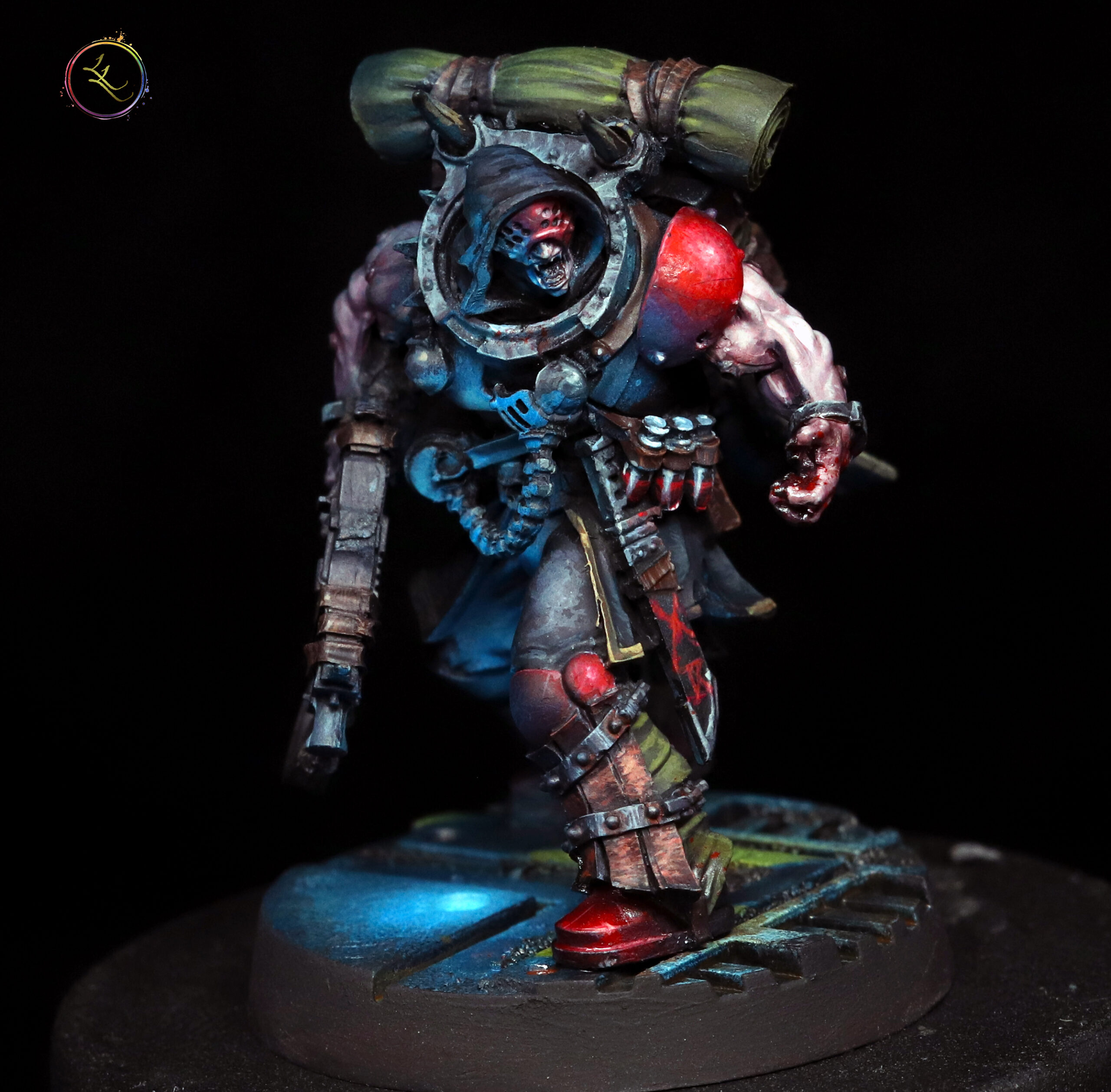
This Vandoth piece came together through lighting decisions more than anything else. Early on, the focus was on where the light would sit, how far it would travel, and what would be left in shadow. Once that was established, everything else followed from it.
The setting behind the model matters here. Necromunda isn’t clean or evenly lit. Most of it exists in half-light — failing lumen strips, chemical haze, narrow corridors that swallow detail. Trying to represent that on a miniature comes down to control. Not everything should be visible at once.
Working the Light
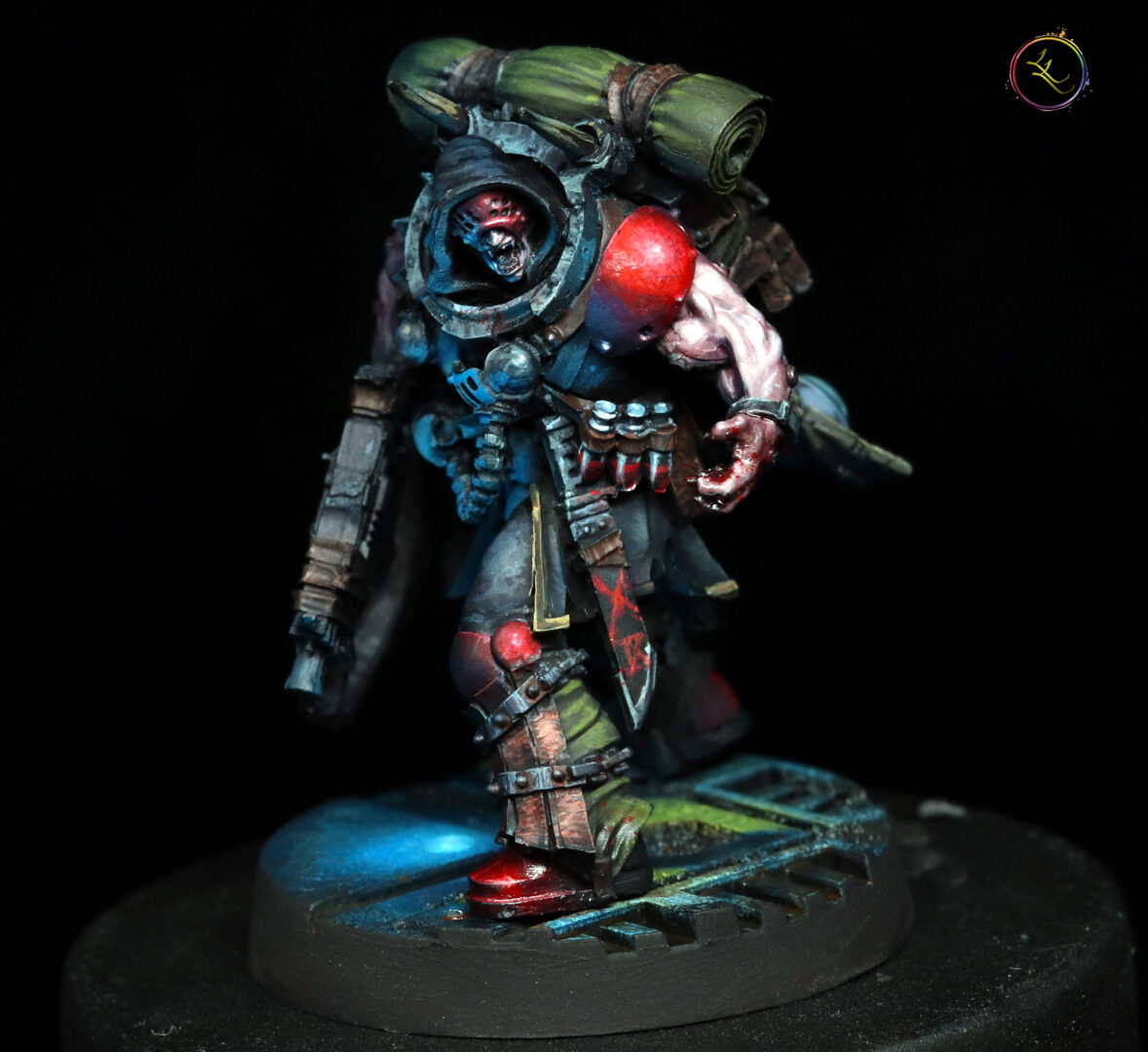
The OSL was treated as part of the environment rather than an effect applied on top. The source defines the space. Edges catch it. Surfaces turn away from it. Some areas barely register at all.
A lot of the model is intentionally held back. That’s where the atmosphere starts to come through. If every material is pushed to full clarity, the illusion disappears. The eye needs somewhere to settle, and somewhere it can’t quite resolve.
The base supports this in a quiet way. Tones are kept low and consistent, just enough variation to ground the figure without pulling attention away from the light source.
Keeping the Setting Intact
With Necromunda, it’s easy to over-explain the environment by adding more detail. Pipes, cables, debris — all of that can help, but it can also dilute the mood if it’s not controlled.
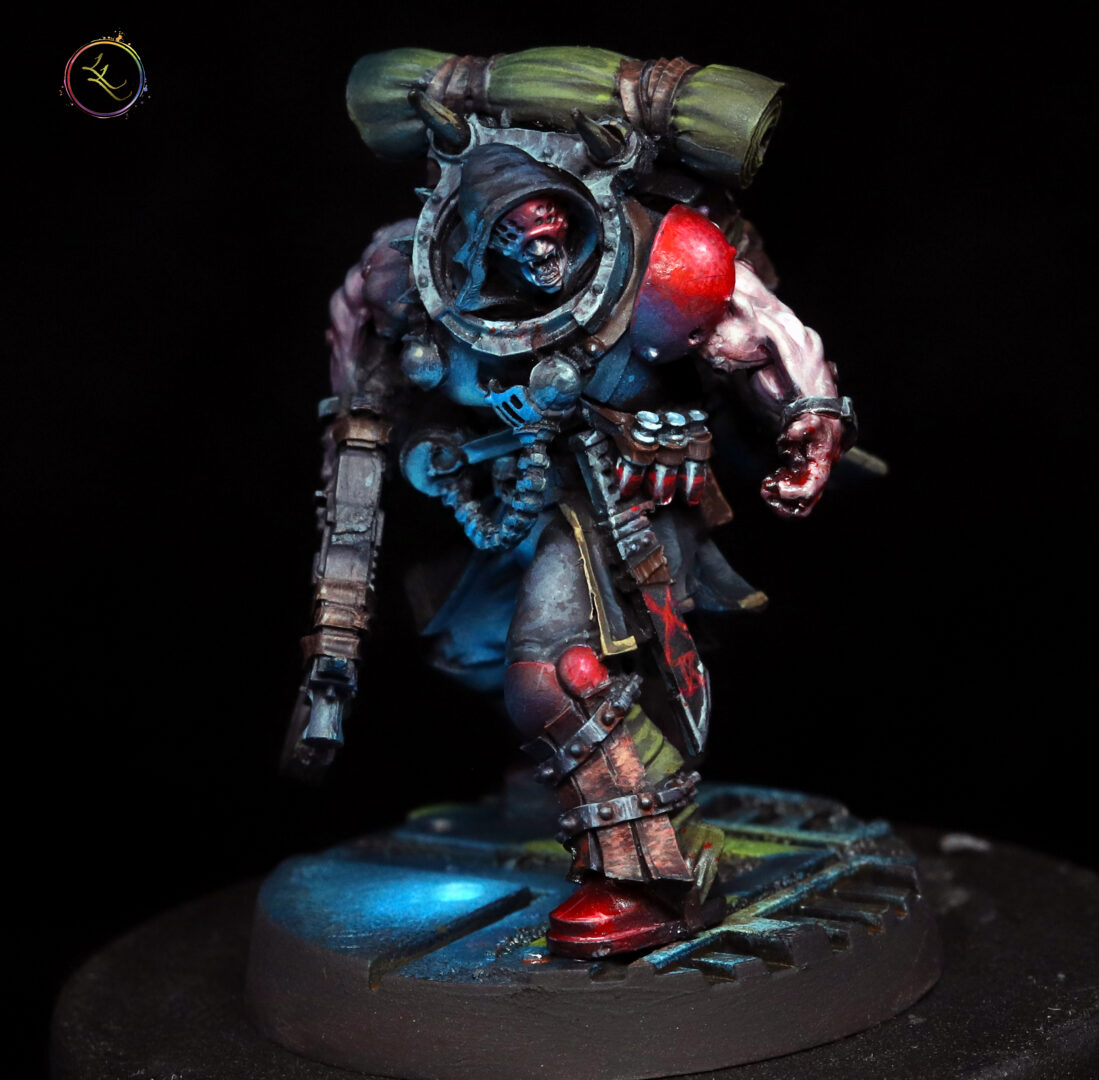
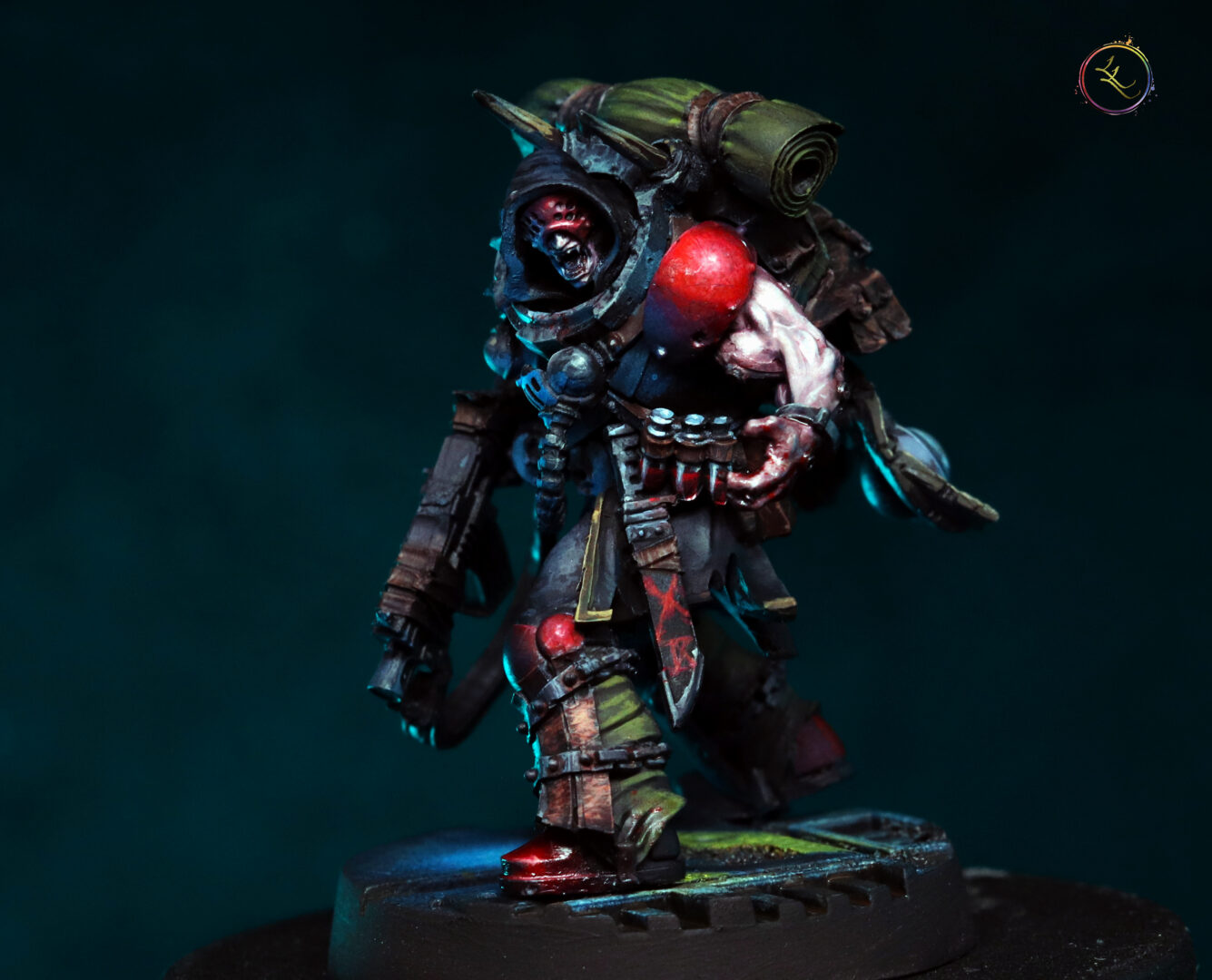
Here, the setting comes through tone instead. Cooler shadows, limited colour range, and a clear separation between lit and unlit areas. The figure sits within that space rather than being placed on top of it.
That approach keeps the model readable while still carrying some sense of depth.
The Character
Vandoth himself is left deliberately open. There’s nothing explicit in the sculpt that pins him to a faction or origin, and that works in his favour.
Details were handled with restraint so the lighting remains the dominant read. Metals are dulled down. Cloth stays neutral. Skin tones are present but not pushed. You catch parts of him as the light moves across the model, rather than taking everything in at once.
It leaves room for interpretation. Where do you think he comes from?

Learning OSL in Practice
This kind of lighting relies on structure more than intensity. Clear source, controlled spread, and a consistent falloff across surfaces. Once that’s in place, the effect starts to feel natural.
I’ve broken the full process down over on the Lil’Legend Studio Patreon, including how to plan OSL from the start, manage saturation, and keep the underlying volumes intact. If you’re looking to move beyond basic glow effects and build something more atmospheric, that’s where the detailed guides sit.